Context
- Digital checklist and inspection platform for structured field data capture
- Combines offline-capable mobile execution with web-based configuration and backoffice control
- Turns paper-style protocols into reusable workflows with clear evidence trails
- Built for compliance, audit, maintenance, and inspection-heavy workflows
Inspection and compliance work rarely breaks down because teams lack a form. It breaks down when documentation is inconsistent, evidence is missing, or data disappears into reports no one can reuse. That is exactly why Check-it matters. It supports the whole chain: configure the workflow in the backoffice, capture the work in the field, and keep the result useful afterwards.
What makes the product stand out is that it behaves much more like a configurable documentation platform than a single checklist app. The strength of the product is not one isolated feature. It is the way web configuration, mobile evidence capture, offline use, and follow-up all work together in one operational system.
Product visuals
Screens, product surfaces, and supporting material

Core differentiator
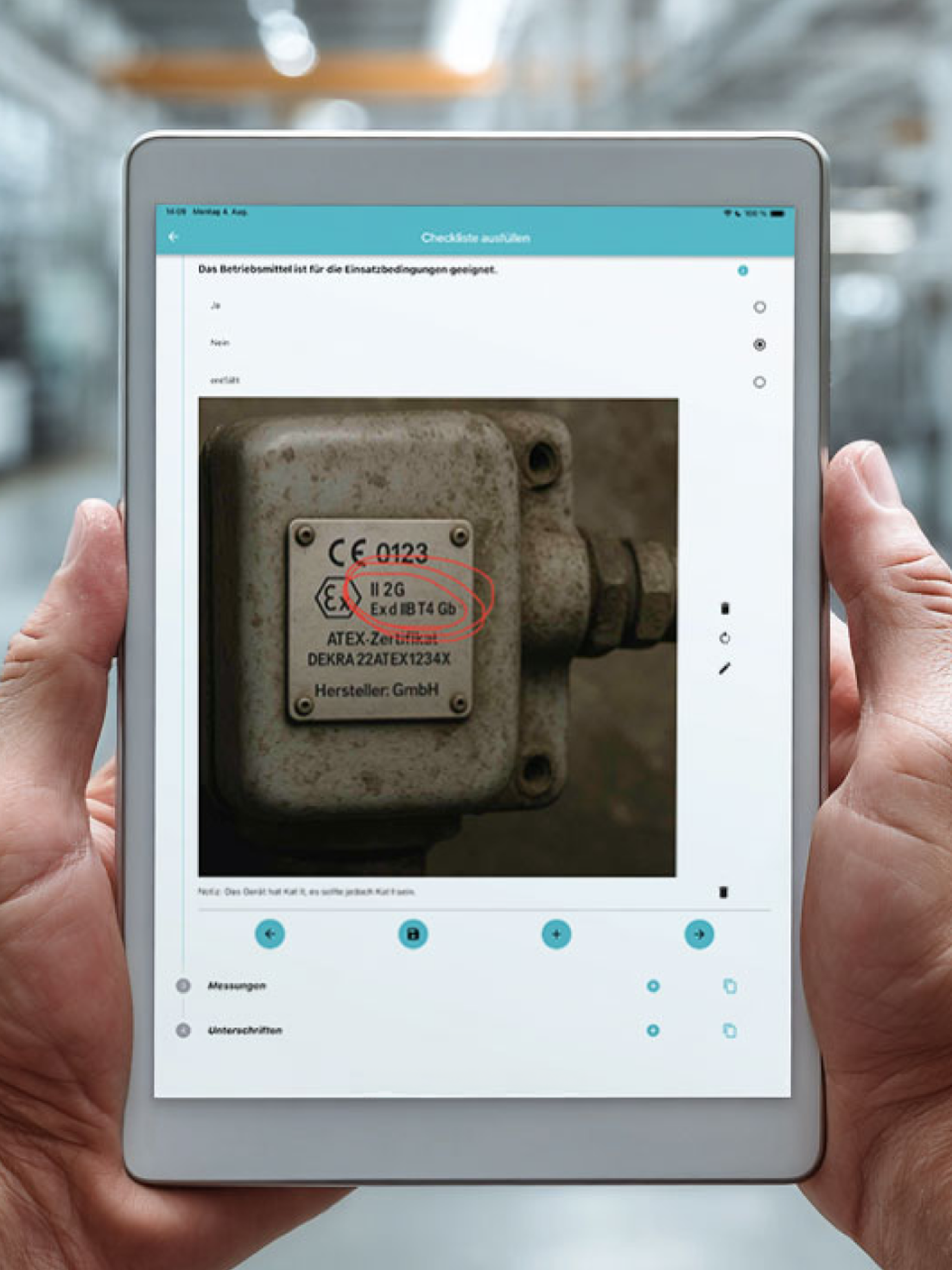
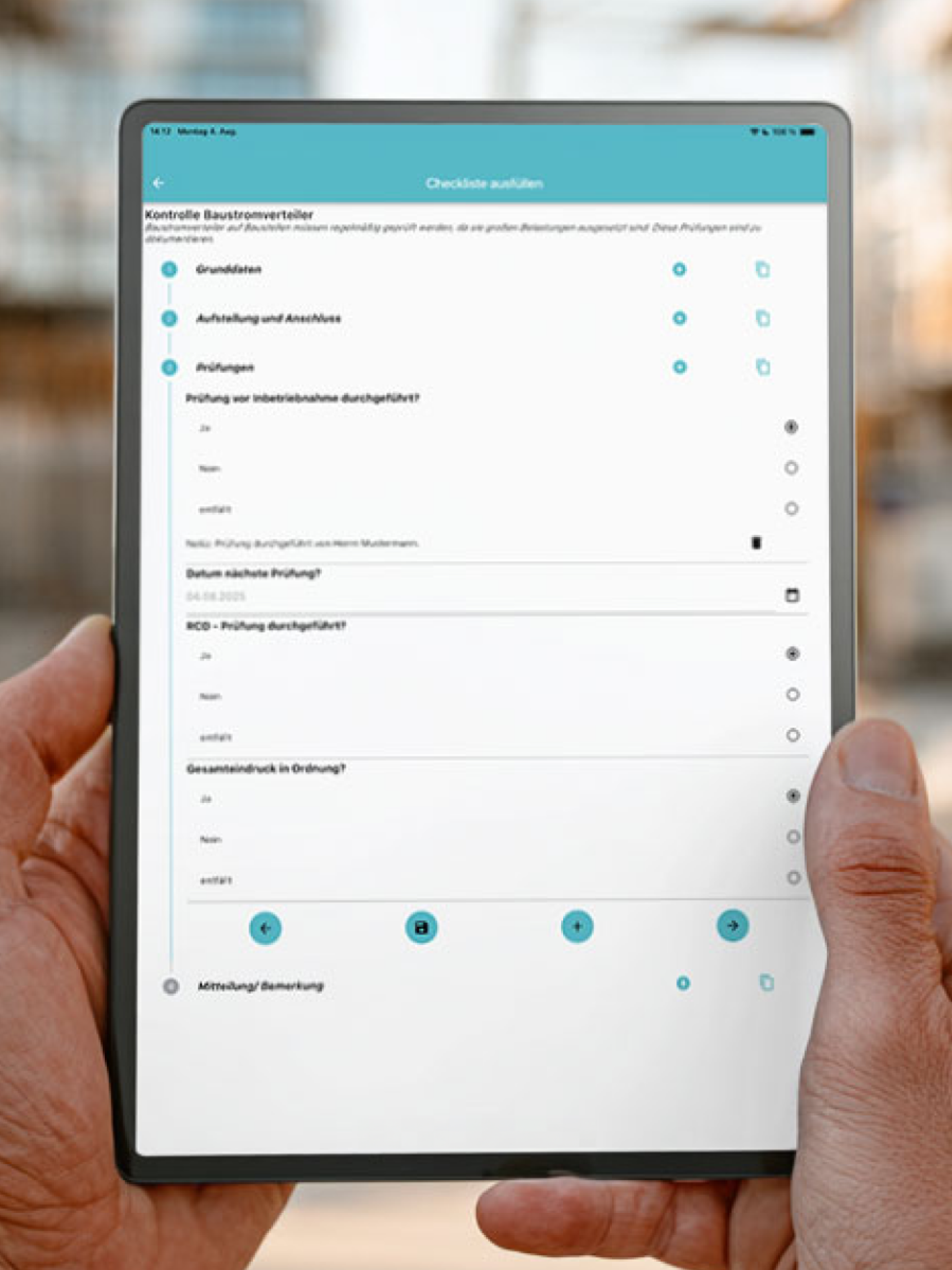
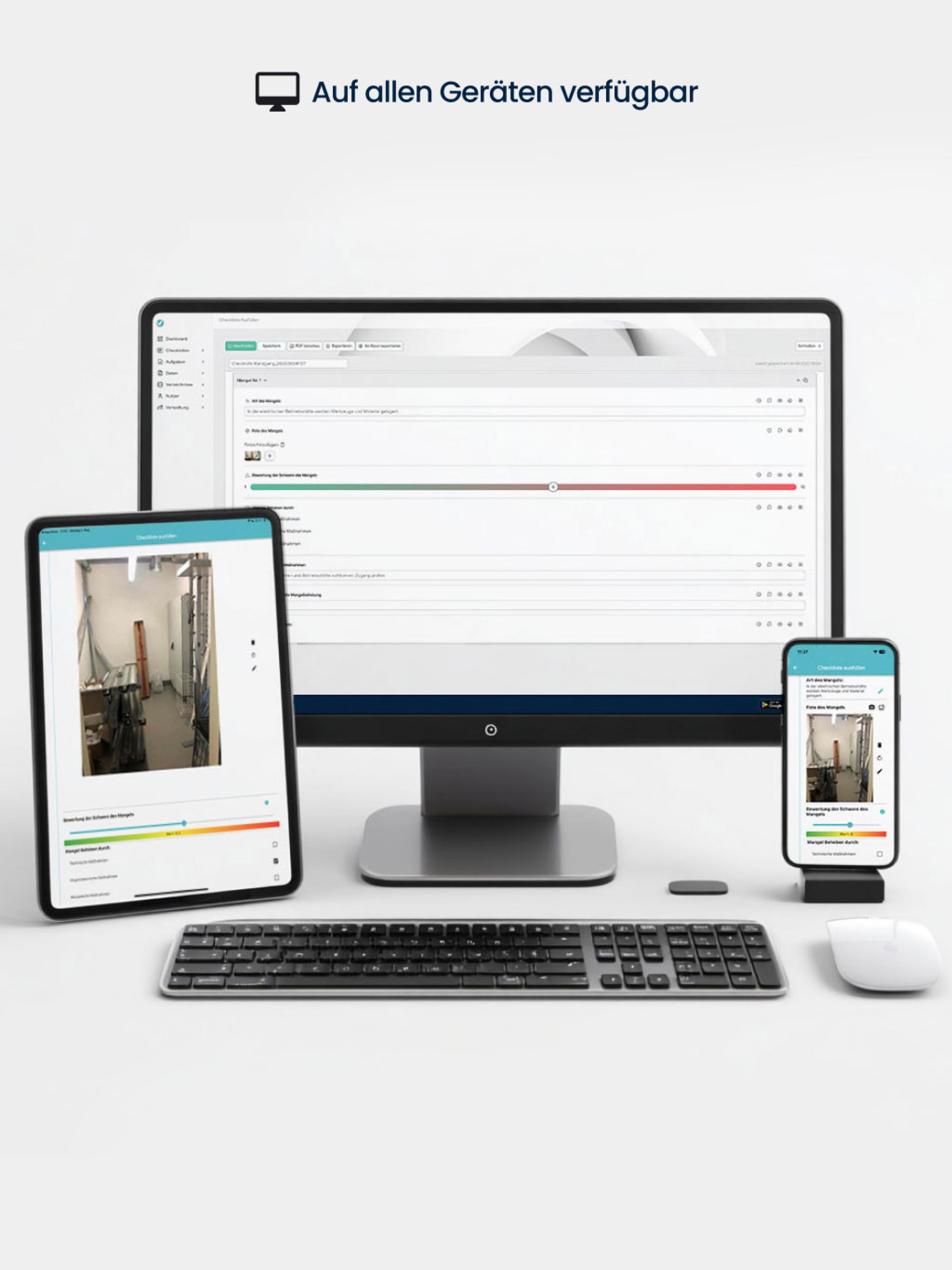
At the heart of the product is the combination of web control and field execution. Teams can create and manage structured checklists online, then use them on smartphone, tablet, or PC in the moment where the work actually happens.
Offline capability remains one of the main reasons Check-it feels like a serious operational app rather than a thin digital form layer.
- Users can complete checklists on the smartphone even without network connectivity
- Data is stored locally on the device by default
- Reference data can remain available while a checklist is being filled out offline
- Offline work is treated as a built-in working mode, not as an edge case
This matters because inspections, walkthroughs, maintenance, and safety documentation often happen exactly where stable coverage cannot be assumed. A product like this only becomes trustworthy once evidence capture, checklist completion, and later synchronization are decoupled from constant connectivity.
What the product delivers
- Online checklist creation and backoffice configuration from modular building blocks
- Offline-capable mobile completion with local data persistence
- Modular checklist building with reusable blocks
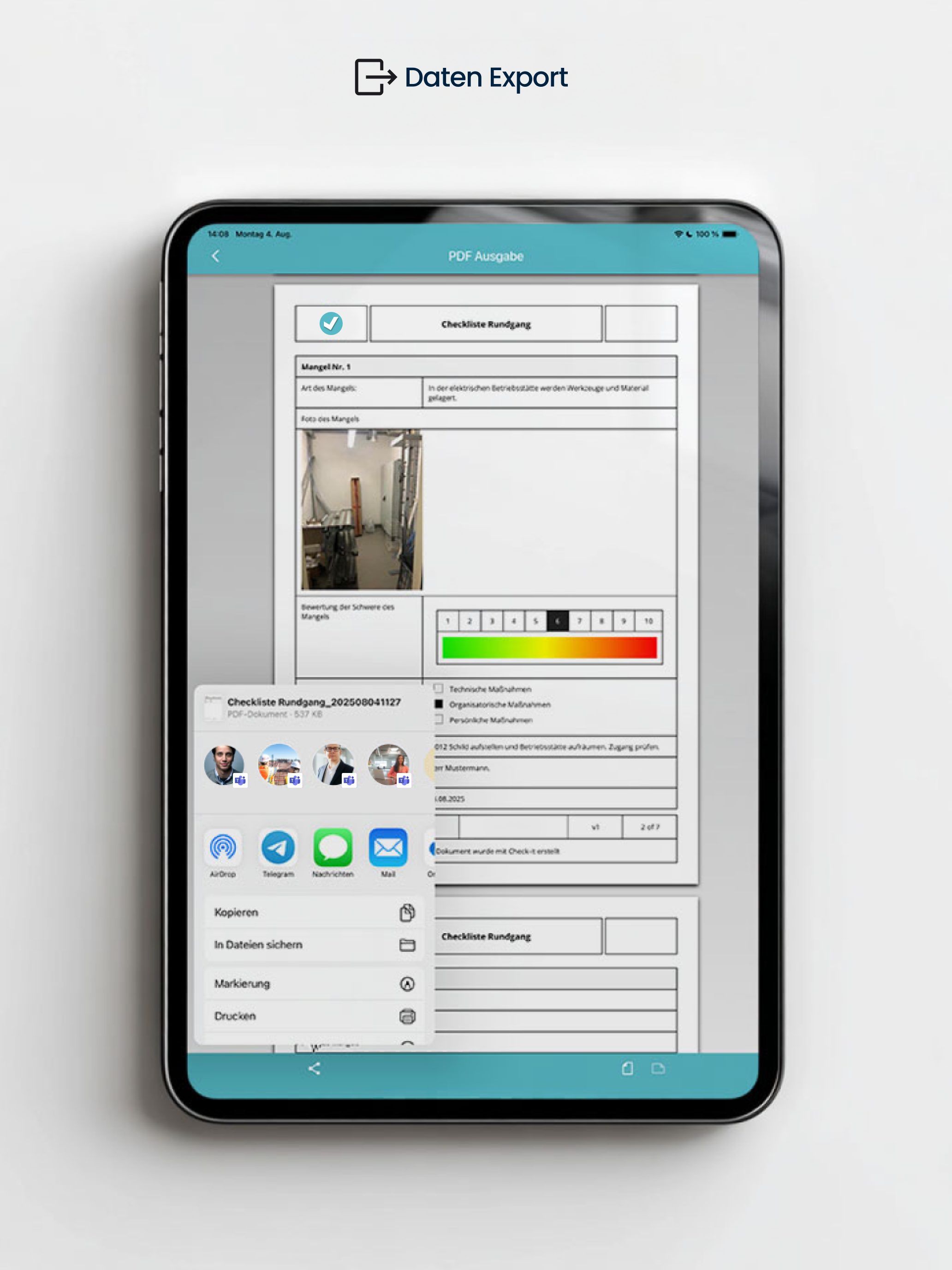
- PDF evidence with photos and signatures
- Open items, object management, and API-based integration options
- Optional on-prem deployment for organizations with stricter hosting requirements
Web configuration and backoffice value
What is especially strong here is that the web side is not an afterthought. Check-it online gives teams a place to build checklists from reusable modules, manage object and reference data, organize users, and work with the results after field execution.
This matters because the platform does not end with the mobile device. Configuration, administration, evaluation, and follow-up live in the same product family. That is what makes it useful for organizations that need both operational flexibility in the field and control in the backoffice.
The create-fill-evaluate model
One of the clearest strengths of the product is its three-part logic: create checklists online, complete them in the field, and evaluate or reuse the resulting data afterwards. That sounds simple, but it gives the platform real lifecycle depth instead of treating mobile capture as the end of the story.
Within that model, users can capture:
- Photos, annotations, and signatures
- Geocodes, timestamps, measurements, and sketching
- Conditional logic, sub-checklists, and repeatable sections
- Structured outputs that can be reviewed, shared, and reused
Configuration depth
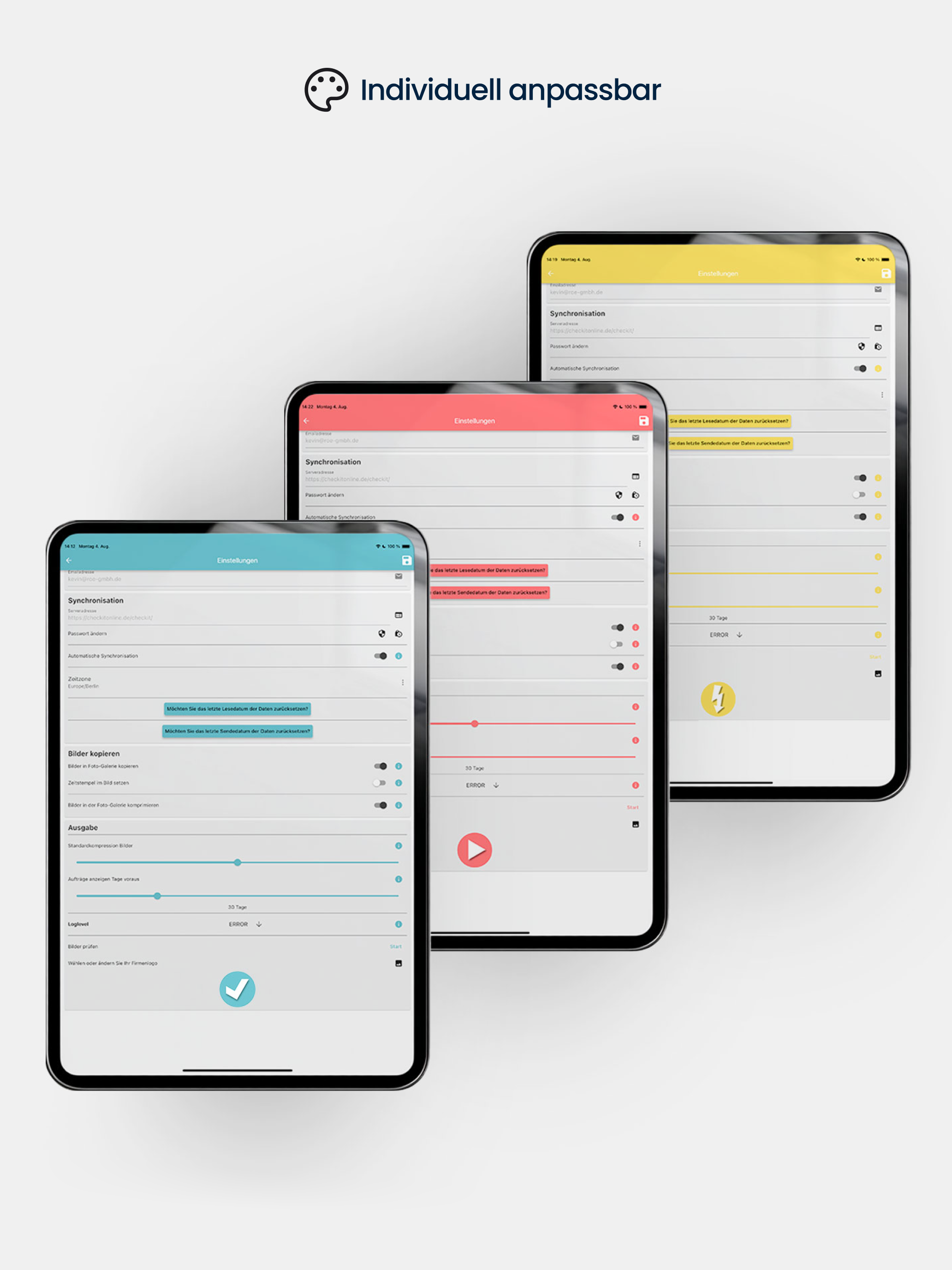
What is especially strong here is the level of configurability. Check-it gives teams a kit of building blocks rather than a fixed inspection form, and that configurability is clearly designed for use in a web-based administration environment as well as in the mobile app.
- Standard building blocks include photos, signatures, date and time, freehand sketching, multiple choice, measurements, location data, text fields, and structured sections
- Advanced building blocks include object structures, logic with sub-checklists, reference tables, approval flows, and risk assessment components
- Special functions include duplicated sections, required fields, multimedia links, and adding new blocks while filling out a checklist
That level of configurability is what moves the product from a checklist app toward a reusable workflow system. It means the platform can adapt to very different operational environments without losing structure.
Governance, deployment, and operating model
The wider operating model is just as important as the mobile capture itself.
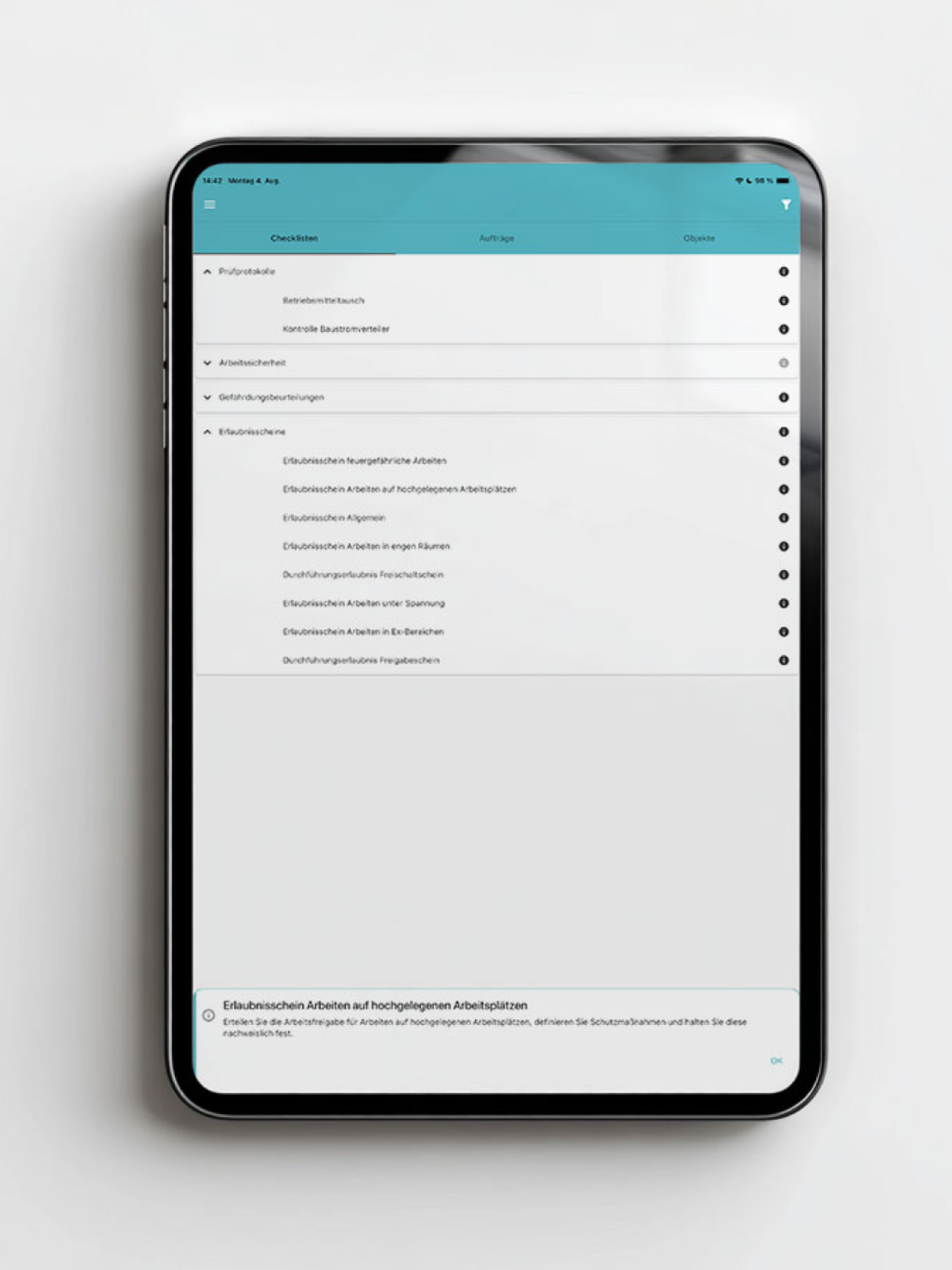
- Order management, object management, open-points tracking, API integration, customer-specific document output, and on-prem deployment extend the platform well beyond simple checklist execution
- The SaaS model stores data on cloud servers in Germany, while an on-prem option is available for organizations that want their own server environment
- Standard, Enterprise, and Add-On models make it possible to scale the platform with the operational needs of the organization
- Unlimited checklist templates and completions, together with admin-controlled user activation, support long-term governance rather than one-off rollout scenarios
What is especially strong here is that Check-it can be introduced as a working platform, not just as a mobile tool. It can be configured, governed, and extended over time across both backoffice and field use.
How it is used in practice
What is especially convincing here is the breadth of operational use the platform can support.
- Maintenance teams can document recurring inspections and follow-up work in a structured way
- Contractor qualification, release permits, safety walkthroughs, and risk analysis can all be handled inside the same platform logic
- Asset and facility documentation benefits from photo capture, signatures, PDF generation, and structured data that can still be reused afterwards
- The result is better documentation quality, faster execution in the field, and less paper- or Excel-based follow-up
This is exactly the kind of capability organizations need when they are looking for a platform that can support real operations at scale, including environments where offline execution remains essential.
Contribution note
As BasalBit GmbH, we contributed directly as the delivery company on this project.
- Delivery of inquiry and checklist workflows
- Web-based configuration and backoffice workflow support
- Mobile data capture with offline capability
- PDF evidence generation, signature capture, and photo workflows
- API integration and advanced workflow building blocks
In this project, we were able to support a product that sits at the intersection of configurability, compliance, web-based administration, offline capture, and everyday field usability.
This is one of the strongest platform references in the portfolio: reusable workflow design, robust offline-capable evidence capture, operational follow-up, and deployment models that can fit both cloud and stricter enterprise environments.
Disclaimer & sources
Product names and trademarks belong to their respective owners. We present this as a BasalBit portfolio case study. On this project, BasalBit GmbH contributed directly as a company.